Canton Network tokenization Moves $30 Trillion of Securities onto Bitcoin Layer-2
Canton Network tokenization partners with the Depository Trust & Clearing Corporation to move $30 trillion of securities onto a Bitcoin Layer-2 settlement.
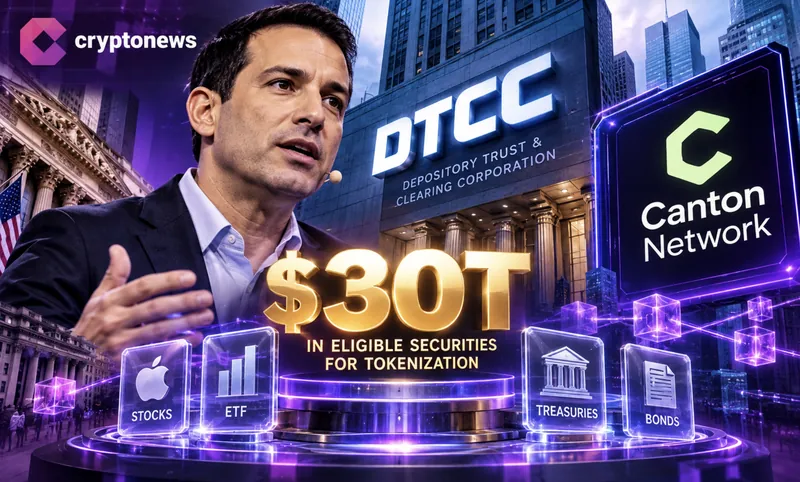
Canton Network tokenization Moves $30 Trillion of Securities onto Bitcoin Layer-2
On October 29, 2024, the Depository Trust & Clearing Corporation (DTCC) and Canton Network announced that Canton Network tokenization has moved a total of $30 trillion of securities onto a Bitcoin Layer-2 solution. The partnership, reported by cryptonews.com, represents the largest move of institutional-grade assets onto a blockchain to date.
How the Tokenization Works
Canton Network tokenization relies on its Layer-2 protocol, which operates atop the Bitcoin mainnet. Securities are represented as digital tokens that retain the legal characteristics of their underlying assets. DTCC provides custody services, while Canton Network supplies the technical infrastructure for issuance, transfer, and settlement. The tokens are designed to be interoperable with existing securities registries, allowing traditional market participants to trade them without abandoning current legal frameworks.
Market Structure Implications
The move introduces a new settlement venue for institutional investors. Traditional clearinghouses, such as DTCC’s own Depository Trust Company, have long dominated settlement for equities, bonds, and derivatives. By shifting a $30 trillion value onto a blockchain, the partnership could reduce settlement times from days to seconds, lower counterparty risk, and cut operational costs associated with custodial reconciliation.
However, the transition also raises questions about regulatory oversight. DTCC’s involvement suggests that the tokenized securities will remain subject to U.S. securities regulations, but the use of a decentralized ledger may blur the line between regulated and unregulated activity. Market makers and liquidity providers will need to adapt to new trading venues that operate on Bitcoin’s Layer-2, potentially reshaping fee structures and market depth.
Who Bears the Cost and Who Gains Leverage
DTCC’s participation indicates that traditional custodians will absorb some of the operational costs associated with maintaining the tokenization framework. The partnership may require DTCC to invest in new infrastructure, including secure key management and compliance tooling tailored to blockchain transactions.
Conversely, institutional investors stand to gain leverage through faster settlement and reduced exposure to settlement risk. The use of Bitcoin’s Layer-2 also offers scalability advantages, allowing the system to handle high transaction volumes without congesting the base layer.
Operational Consequences for Firms
Firms that currently rely on DTCC’s clearing services will need to integrate with the new tokenized platform. This integration may involve updating back-office systems, re-engineering trade capture processes, and ensuring that legal teams understand the contractual implications of tokenized securities.
Liquidity providers will face new competition from on-chain market makers that can offer tighter spreads and lower latency. Traditional exchanges may need to develop or adopt Layer-2 solutions to stay relevant.
Regulatory and Compliance Considerations
The partnership signals a willingness by a major U.S. regulator to engage with blockchain technology. DTCC’s involvement suggests that the tokenized securities will be registered and compliant with SEC rules, but the exact regulatory framework remains unclear. Firms will need to monitor developments from the SEC and other agencies to ensure continued compliance.
What to Watch Next
The next milestone will be the launch of the tokenized platform and the first batch of securities issued. Market participants should track the rollout schedule, as the timing will influence liquidity and pricing dynamics. Additionally, observing how DTCC manages custody on a decentralized ledger will provide insights into the feasibility of broader blockchain adoption in securities settlement.
Related Insight
For firms considering tokenized asset strategies, the Multi-Chain Gas & MEV Burn Radar tool can help assess the cost and risk profile of operating on Layer-2 networks.
The partnership between Canton Network tokenization and DTCC marks a significant step toward integrating blockchain into mainstream financial infrastructure. The outcome will shape how securities are settled, who controls the process, and how costs are distributed across the market structure.
Related coverage
- Multi-Chain Gas & MEV Burn Radar
- Aviva tokenized fund: £50m launch and market implications
- Standard Chartered BTC Trading UAE: Direct Bitcoin and Ethereum Access for Wealthy Clients