Binance Hack Recovery: $3 B of Stolen Assets Remain Frozen
After the $6.4 B Binance hack, analysts say $3 B of stolen crypto remains recoverable, while the rest may be lost to North Korean laundering tactics.
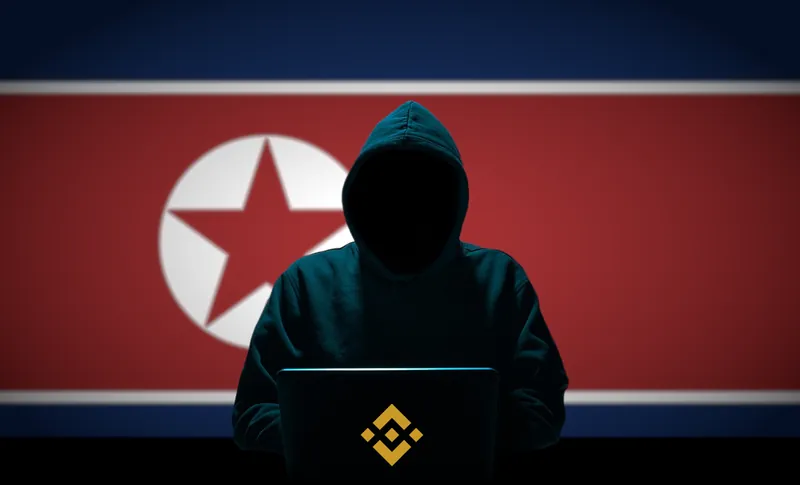
Binance Hack Recovery: $3 B of Stolen Assets Remain Frozen
The Binance hack recovery process has revealed that roughly $3 B of the $6.4 B stolen in the 2023 breach remains frozen within the issuers of USDT and USDC. The remaining $3.4 B, dispersed across less centralized protocols, has not yet been recovered and may be lost to state-backed actors believed to be behind the attack.
Who Holds the Leverage?
Leverage in this scenario resides with the issuers of the two dominant stablecoins, Tether and Circle. Their ability to blacklist addresses at the token level means that any holdings transferred to or from a frozen wallet become immovable. The frozen tokens can be burned and reissued, effectively restoring the balance to the original holder. This mechanism gives the issuers a decisive role in determining whether the stolen assets can be returned to Binance.
Conversely, the cost is borne by Binance’s users and the exchange’s balance sheet. The $3.4 B that remains unfrozen is beyond the reach of the issuers’ blacklist power and is likely to stay stranded in the wallets of the attackers. Binance’s insurance fund, designed to cover losses from hacks, is insufficient to cover the full amount, leaving the exchange to absorb the remaining deficit.
Operational Consequences for Exchanges
The partial recoverability of the stolen funds has immediate operational implications. Exchanges that hold large balances of stablecoins must now consider the risk that a portion of those balances could be frozen without recourse. The ability of issuers to reissue tokens also introduces a new layer of operational risk: a misstep in the blacklist process could result in a permanent loss of liquidity.
For Binance, the $3 B that can be reclaimed will be returned to the exchange’s wallet, but the process is contingent on coordination with Tether and Circle and on the legal framework governing the freeze. The remaining $3.4 B, spread across decentralized protocols, will likely remain inaccessible. Binance will need to adjust its risk models to account for the probability that future large-scale thefts will result in similar recoverability gaps.
The Role of North Korea in Crypto Theft
Analysts from TRM Labs, Elliptic, and Chainalysis have linked the Binance hack to a pattern of thefts attributed to the Democratic People’s Republic of Korea. According to TRM Labs, the DPRK accounted for 76% of crypto hack losses in 2026, a figure that likely understates the true volume. The state actor’s signature involves rapid movement of funds through mixers, cross-chain bridges, and exchanges with weak AML controls.
The DPRK’s laundering strategy begins immediately after the theft. Funds are routed through decentralized mixers such as Tornado Cash, then bridged to other blockchains to obfuscate origin. When the actors wish to convert the crypto into fiat, they turn to exchanges that offer little to no identity verification, or to money-mule services and offshore banking channels in jurisdictions with lax regulation. In some cases, the stolen crypto is used directly for procurement of military equipment or raw materials, bypassing the need for a cash conversion step entirely.
Market Structure Implications
The incident highlights a structural weakness in the crypto ecosystem: the reliance on centralized stablecoin issuers for liquidity and the lack of a uniform mechanism to freeze assets across all protocols. While Tether and Circle can effectively immobilize their tokens, decentralized protocols lack a comparable tool, leaving a significant portion of stolen assets untethered. This asymmetry creates an incentive for attackers to target assets that are not protected by issuer-level blacklists.
Regulators may respond by tightening requirements for stablecoin issuers to maintain audit trails and enforce stricter AML protocols. Exchanges may also diversify their custody strategies, moving away from a heavy reliance on a single stablecoin and toward multi-asset or multi-issuer models that reduce exposure to a single point of failure.
What to Watch Next
The next step for Binance will be to negotiate with Tether and Circle to reissue the frozen USDT and USDC back into its wallets. The speed of this process will depend on the legal frameworks governing the freeze and the cooperation of the issuers.
For the broader market, the incident may prompt a reevaluation of the role of centralized stablecoins in exchange operations. Protocol developers may accelerate the creation of on-chain blacklist mechanisms or explore cross-chain governance models that allow for coordinated freezes across multiple assets.
The DPRK’s continued use of crypto theft as a revenue stream suggests that future attacks will likely follow similar patterns. Exchanges and regulators should anticipate rapid laundering through mixers and unregulated exchanges, and consider implementing real-time monitoring of cross-chain flows that could signal illicit activity.
The situation remains fluid, and further developments will hinge on the cooperation between Binance, stablecoin issuers, and law enforcement agencies tasked with tracing and recovering the remaining stolen assets.
Related coverage
- Multi-Chain Gas & MEV Burn Radar
- Binance theft Leaves $3 B in Liquid Assets Unfrozen
- Binance Hack: Withdrawals Halted After $5.8 B Theft