Zcash NU7 Upgrade Set to Triple Block Speed
The Zcash NU7 upgrade will cut block intervals from 75 to 25 seconds, boosting private payment speed while preserving issuance through ZIP 218.
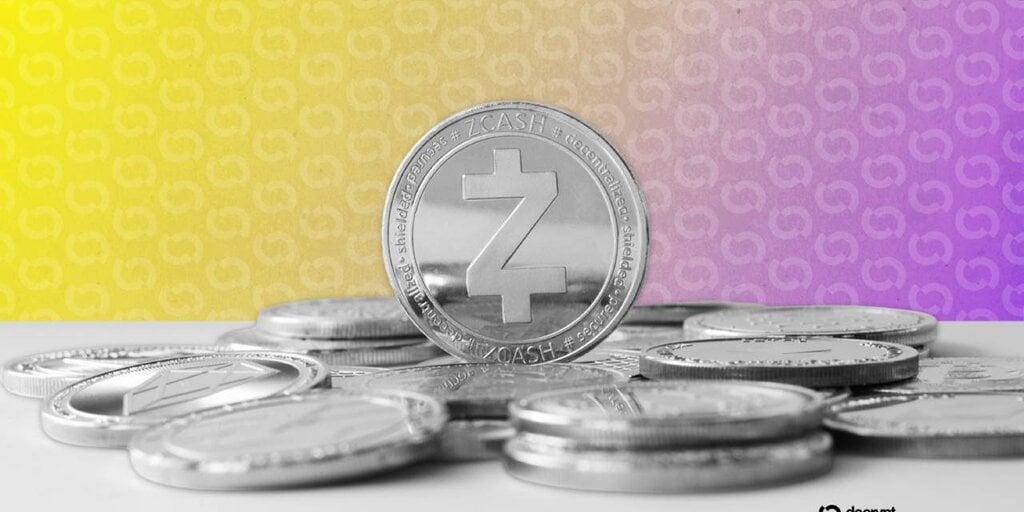
Zcash developers announced that the Zcash NU7 upgrade will go live on November 5, 2026, cutting the block interval from 75 seconds to 25 seconds and introducing a fee-banking mechanism to sustain miner revenue after 2031. The change, detailed in a Decrypt report, represents the most significant performance improvement for the privacy-focused chain since its launch and carries implications for transaction throughput, miner economics, and long-term security.
Zcash NU7 Upgrade Technical Overview
NU7 targets the core consensus parameter that defines how often the network finalises a batch of shielded transactions. By reducing the block time threefold, Zcash aims to bring confirmation latency for private payments closer to that of conventional card-present transactions. The upgrade also revises the block reward schedule through ZIP 218, a proposal that scales the per-block miner subsidy down by roughly a factor of three. This adjustment ensures that the aggregate daily issuance of ZEC remains unchanged, preserving the monetary policy that underpins Zcash’s capped supply.
The fee-banking component, slated to start collecting transaction fees in 2026, will allocate about 60 % of those fees to a sustainability fund. The fund is designed to supplement miner income once the built-in halving schedule exhausts most of the block subsidy after 2031. By pre-emptively earmarking fee revenue, the protocol seeks to avoid the abrupt miner revenue drop that has historically pressured proof-of-work networks during later halving cycles.
Market Structure Implications
From a market-structure perspective, the faster block cadence could improve Zcash’s competitiveness in the privacy-coin segment. Current rivals such as Monero (XMR) and Dash (DASH) already benefit from sub-minute block times; aligning Zcash’s latency reduces a key friction point for institutional traders and payment processors who require near-real-time settlement.
However, the reward reduction embedded in ZIP 218 may temper miner participation in the short term. Miners who rely on the higher per-block subsidy might experience a temporary revenue dip until the fee-banking fund matures. Early adopters of the new fee-banking model could see a shift in hash-rate distribution, potentially concentrating mining power among operators with diversified revenue streams (e.g., those that already run multi-algorithm rigs or have access to low-cost electricity).
The upgrade also preserves the existing halving schedule—98.9 % of voting coin-holders chose to keep Bitcoin-style halvings intact, according to the on-chain vote that involved 2.4 million ZEC and a 66 % participation rate. Maintaining halvings signals continuity for investors who model ZEC’s supply curve similarly to Bitcoin, reinforcing the narrative of a predictable, deflationary asset.
Operational Consequences for Custodians and Exchanges
Custodial services and exchanges will need to update node software to the NU7 specifications before the activation height. The Zcash Foundation, Project Tachyon, Valar Group, ZODL, and Shielded Labs have coordinated a unified rollout, reducing the risk of a fragmented client ecosystem. Nonetheless, operators should allocate a testing window between the October 6 testnet activation and the October 20 final height to validate transaction processing, fee accounting, and block-reward calculations under the new parameters.
Liquidity providers on decentralized exchanges (DEXes) may experience a temporary uptick in transaction volume as users test the faster confirmation times. Market makers should monitor fee-banking fund accrual rates, as the shift of 60 % of fees into a sustainability pool could affect the net fee revenue available for arbitrage strategies that rely on fee rebates.
Compliance and Regulatory Outlook
Regulatory scrutiny may intensify as Zcash’s transaction throughput improves. Faster private payments could attract attention from AML/CTF regulators who monitor privacy-coin activity. Custodians and exchanges should be prepared for potential compliance requests that demand enhanced on-chain analytics or transaction-monitoring solutions. Aligning with emerging guidance will be critical for institutional adoption.
Risk Assessment and Open Questions
The primary risk lies in miner economics during the transition period. While ZIP 218 maintains daily issuance, the per-block reward reduction could incentivise miners to switch to more profitable chains if fee revenue does not offset the lower subsidy quickly enough. The sustainability fund’s design—its exact allocation rules, governance, and withdrawal mechanisms—remains partially opaque, leaving open the question of how effectively it will cushion miner income after the 2031 halving horizon.
A secondary risk concerns network stability. Faster block times increase the probability of orphaned blocks, especially in regions with higher latency. Zcash’s existing consensus algorithm (Equihash) must handle the higher block frequency without compromising the zero-knowledge proof verification pipeline. Early testnet results, as reported by developer Sean Bowe, suggest acceptable performance, but large-scale mainnet stress tests will be the definitive gauge.
What to Watch Next
The next milestone is the October 6 testnet activation, where the community will observe block propagation, fee accrual, and reward distribution under NU7 rules. A successful testnet will lead to the final activation height announcement on October 20. Stakeholders should track the following indicators:
- Hash-rate distribution – shifts toward miners with diversified revenue models could signal early adaptation to the reward change.
- Fee-banking fund balance – the rate at which the fund accrues fees will indicate whether the 60 % allocation is sufficient to sustain miner incentives post-2031.
- Transaction latency metrics – real-world confirmation times will validate the claimed three-fold speedup and influence adoption by payment processors.
- Regulatory filings – any new guidance from financial regulators regarding privacy-preserving transaction speeds could affect institutional participation.
Trusted Sources
For official technical details, see the Zcash project’s documentation on the upgrade at the Zcash website.
Data sourced from Decrypt’s coverage of the NU7 upgrade and on-chain voting results.