Crypto Billionaires Donate to UK Politics with Record £97M to Reform UK
Crypto billionaires donate to UK politics as Ben Delo and Christopher Harborne give Reform UK a record £97 million, raising fresh regulatory questions.
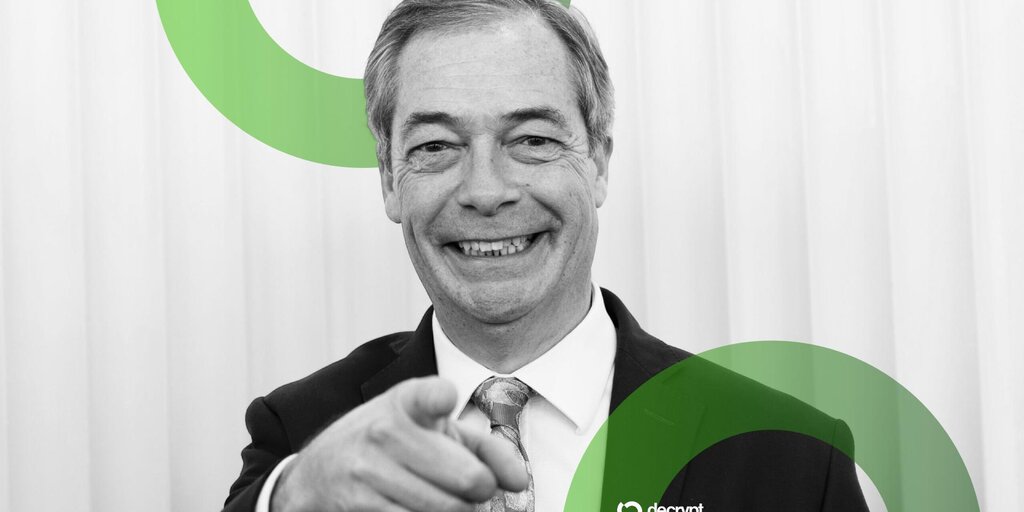
crypto billionaires donate to UK politics: impact on Reform UK
The headline donation of £72 million ($240 million) by two crypto billionaires has reshaped the funding landscape for Reform UK. Ben Delo, co-founder of BitMEX, announced a £36 million gift on Friday, and the following day Christopher Harborne, a major Tether investor, matched the amount. Together they delivered a record-size contribution that dwarfs the total raised by all other UK parties in the previous year. This opening directly answers the core query: how are crypto billionaires influencing UK politics?
How the donations were structured and delivered
- Friday – Delo disclosed a £36 million donation in the Telegraph. The payment was made in fiat pounds after converting crypto holdings, allowing him to comply with the March 2024 ban on direct crypto-linked gifts.
- Saturday – Harborne, who has previously contributed £15 million to Reform, posted a matching £36 million donation. He framed the gift as a “competitive spirit” and emphasized that no personal favors were expected.
- Use of funds – Reform UK plans to allocate the cash to hire 400 campaign managers—one per target seat—and to recruit senior policy advisers. The party claims the infusion puts it on “election footing” for the next general election.
Regulatory backdrop and potential loopholes
The UK introduced a ban on crypto-related political donations in March 2024. While the rule blocks contributions that are directly linked to crypto assets, it does not prevent donors from converting crypto to fiat before giving the money. Delo and Harborne’s gifts exploit this conversion pathway, exposing a regulatory gray area that may prompt legislative refinement.
Donors must be on the electoral register for at least 12 months to give more than £100,000 annually. Both billionaires satisfy this requirement, and there is currently no cap on the total amount a UK-based donor can give. Labour’s recent proposal to limit gifts from overseas Britons to £100,000 could tighten the landscape, but domestic crypto-wealth converters remain largely unrestricted.
For official guidance see the Electoral Commission page on political donations: UK Electoral Commission guidance.
Market-structure implications for crypto firms and investors
The high-visibility nature of these donations sends a clear signal to institutional investors: crypto-derived capital can be mobilised for political influence when converted to fiat. Asset managers with exposure to crypto-related equities should anticipate heightened compliance scrutiny, especially in jurisdictions tightening AML and political-donation rules.
Exchanges must ensure robust KYC/AML pipelines that can trace large crypto conversions. Firms that cannot demonstrate transparent conversion processes risk reputational damage and possible regulatory action if lawmakers extend the ban to cover fiat conversions of crypto wealth.
A live market overview shows Bitcoin and other major tokens hovering near recent lows, a backdrop that may motivate crypto holders to liquidate positions for strategic purposes.
Operational considerations for campaign teams
Reform UK’s plan to hire 400 campaign managers and a cadre of policy experts will require sophisticated data-driven targeting tools. Campaign operators should anticipate a surge in demand for voter-segmentation platforms, predictive analytics, and secure communications infrastructure. The influx of capital also raises compliance obligations: the party must file detailed donation reports with the Electoral Commission, and any perceived misuse could trigger investigations that jeopardise future fundraising.
Second-order effects on UK election dynamics
Although Reform UK remains a minor player compared with the Conservatives and Labour, the £72 million infusion dramatically expands its resource base. The party can now field a full-scale ground operation in marginal constituencies, potentially eroding the vote share of established parties in targeted regions.
The visibility of crypto-wealth backing a populist, Brexit-focused platform may also shift public discourse around the legitimacy of crypto-derived capital in democratic processes. If other crypto-rich individuals follow suit, the UK could see a new class of political financing that bypasses traditional donor networks.
What operators and institutions should watch next
- Legislative response – Expect parliamentary debates on extending the crypto-donation ban to include fiat conversions of crypto assets. Amendments could introduce a total cap on donations from any single source, regardless of conversion method.
- Compliance upgrades – Crypto exchanges and custodians should review AML frameworks to flag large conversions that may be destined for political use.
- Campaign-tech demand – Vendors offering secure voter-targeting solutions may experience a spike in demand from Reform UK and other parties seeking to replicate this model.
- Public perception – Media scrutiny of crypto-linked political influence could affect the broader reputation of the industry, prompting firms to adopt more transparent ESG disclosures.
Global context: crypto capital in politics worldwide
The UK episode mirrors trends in the United States, where high-net-worth crypto investors have contributed to political action committees (PACs) and super-PACs. However, the UK’s stricter donation caps and the recent crypto-donation ban make the Reform UK case a unique litmus test for how democracies balance free speech, political financing, and anti-money-laundering objectives.
Crypto Wealth Drives UK Political Funding
The £72 million infusion from Ben Delo and Christopher Harborne marks a watershed moment for UK political finance, demonstrating how crypto-derived wealth can be mobilised under existing legal frameworks. Regulators are now contemplating tighter rules, and operators across the crypto ecosystem—from exchanges to compliance firms—must prepare for heightened oversight. Campaign teams are poised to leverage unprecedented resources to reshape electoral competition, while the broader regulatory dialogue will determine whether this episode is an outlier or the first of many crypto-fuelled political campaigns.
Related coverage
- Pump.fun tokenized stocks: Creators Launch Coins Priced in Tokenized Stocks
- Can XRP flip Bitcoin? Ripple Ex-CTO Predicts 18x Surge
- Brent $106, Fed Hike Odds 64% Trigger Crypto Sell Off