Clarity Act stablecoin limits: Banks Push for Tighter Reward Restrictions
Banking trade associations urge Senate leaders to tighten Clarity Act stablecoin limits, warning that reward programs could trigger deposit flight and weaken.
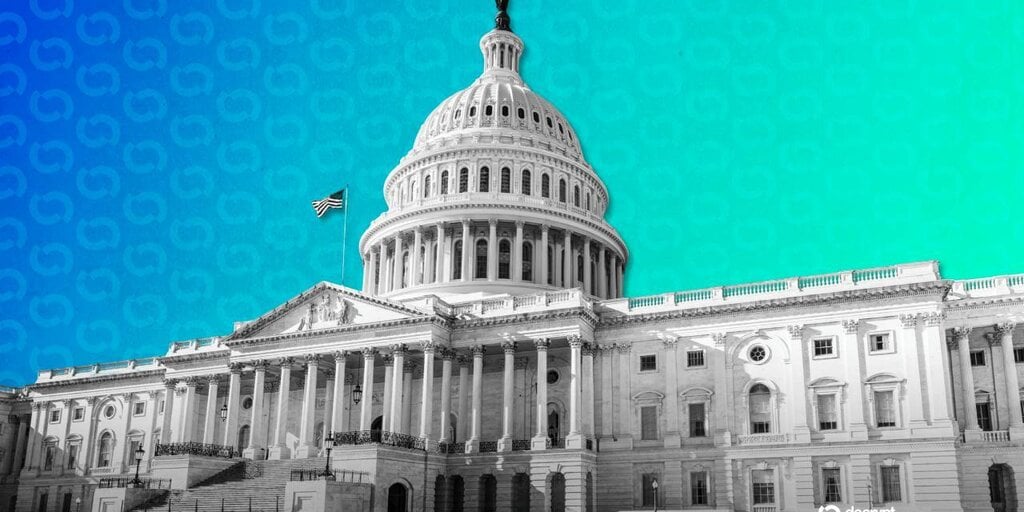
Senate procedural vote on Clarity Act stablecoin reward language
Eight major banking trade associations sent a joint letter to Senate Majority Whip John Thune and Senate Majority Leader Chuck Schumer on Monday, demanding that the Senate-drafted Clarity Act tighten its restrictions on stablecoin reward mechanisms. The groups argue that the bill’s current language leaves a loophole for “interest-like” payments tied to the amount or tenure of stablecoin balances, which could incentivise deposit flight from traditional banks to crypto-native platforms. The request arrives ahead of a procedural Senate vote slated for Tuesday, as the revised bill moves toward the 60-vote threshold needed for passage. The groups’ position is outlined in a filing referenced by Decrypt.
Legislative history of the Clarity Act and the push for stricter stablecoin limits
The Consolidated Asset Liability and Transparency Initiative for Regulated Yield (Clarity Act) seeks a unified federal framework for digital assets and clarifies the jurisdiction of the SEC, CFTC, OCC, and the Federal Reserve. Early drafts imposed a blanket prohibition on “interest or interest-like payments” for stablecoins. A later amendment added an exception allowing rewards that are “solely” based on a customer’s balance, duration, or tenure. Banking groups contend that this exception re-opens the door to traditional deposit-style incentives, undermining the act’s original intent to prevent stablecoins from competing directly with bank deposits.
How tighter Clarity Act limits could reshape stablecoin yield products
If the language is tightened as the trade groups propose, the immediate effect would be a reduction in the attractiveness of stablecoin reward programs that mirror bank deposit interest. Major crypto platforms—including centralized exchanges and DeFi protocols—currently offer yield on USDC, USDT, and newer dollar-pegged tokens such as USDS and USDD through liquidity mining, staking, or tiered interest. By redefining prohibited payments with a “substantially similar” test, the amendment would capture a broader set of incentive structures, forcing platforms to redesign product offerings and potentially replace monetary rewards with non-monetary incentives such as governance tokens or fee discounts.
Capital-flow implications for banks and crypto firms
The Banking Industry Association, the American Bankers Association, and the Independent Community Bankers of America expect the amendment to stem retail deposit outflows to high-yield stablecoin products. The Federal Reserve’s latest H.8 report shows modest year-over-year deposit growth, while crypto-based savings accounts have been cited as a factor in flattening deposit growth for midsize banks. A tighter regulatory environment may preserve the traditional deposit base, supporting banks’ ability to extend credit. Conversely, crypto firms could see a contraction in on-ramp liquidity, prompting a shift toward fee-based revenue models rather than yield-driven attraction strategies.
Compliance and operational challenges
Increased compliance complexity
The proposed “substantially similar” language introduces a subjective test that could raise compliance costs for both banks and crypto firms. Determining whether a reward program mirrors interest will likely require detailed product-by-product analysis, legal opinions, and new reporting obligations to the OCC. Smaller community banks may face disproportionate burdens compared with larger institutions that have dedicated regulatory teams.
Risk of market fragmentation
If U.S. stablecoin issuers are forced to eliminate reward tiers, they may look to jurisdictions with more permissive rules to maintain competitive yields. This could accelerate the migration of crypto-native capital to offshore platforms, diluting the effectiveness of the Clarity Act’s goal of establishing a cohesive U.S. digital-asset market.
Potential slowdown in fintech innovation
The amendment could deter startups from experimenting with novel reward mechanisms that blend traditional finance concepts with blockchain efficiency. While the intent is to protect the banking sector, an overly restrictive regime may stifle the development of hybrid products such as programmable deposits, which could otherwise enhance financial inclusion.
What to watch after the Senate vote
The Senate’s procedural vote on Tuesday will determine whether the revised language proceeds to the floor. If the amendment survives, it will likely be incorporated into the final version of the Clarity Act, with a full Senate debate expected within the next two weeks. Stakeholders should monitor the upcoming CLARITY Act Senate Vote Nears 60-Vote Threshold article for real-time updates on vote counts and coalition dynamics.
In parallel, market participants are watching the aggregate market tracker for signs of shifting stablecoin inflows. Recent data from the aggregate market tracker shows a modest decline in USDC holdings on major exchanges over the past week, suggesting that regulatory chatter may already be influencing depositor behaviour.
Longer-term implications for the digital-asset ecosystem
A stricter Clarity Act could set a precedent for how U.S. regulators treat tokenised financial products that blur the line between deposits and investment yields. By codifying a broader prohibition, Congress would draw a regulatory moat around traditional banking deposits, reinforcing banks’ competitive advantage in the low-risk, interest-bearing segment of the market. At the same time, the move may catalyse a regulatory-arbitrage race, prompting stablecoin issuers to innovate around the prohibition—perhaps by shifting rewards to non-monetary incentives or by relocating operations to friendlier jurisdictions. The efficacy of the “substantially similar” test will hinge on the Treasury and OCC’s ability to issue clear guidance, a process that could take months.
For institutional investors, the key takeaway is to reassess exposure to stablecoin-linked yield products and factor potential regulatory tightening into risk models. Banks, meanwhile, should prepare for a possible influx of deposits that were previously diverted to crypto platforms, ensuring that lending capacity and liquidity buffers are aligned with any sudden capital inflows.
Conclusion
The banking trade groups’ demand for tighter Clarity Act stablecoin limits reflects a strategic effort to protect the traditional deposit base and preserve lending capacity amid rapid digital-asset adoption. The outcome of the Senate vote will shape not only the immediate regulatory landscape but also the longer-term trajectory of fintech innovation in the United States. Stakeholders across the spectrum—banks, crypto firms, and institutional investors—must stay attuned to legislative developments, compliance requirements, and market-flow signals as the Clarity Act moves toward final enactment.
Related coverage
- Pump.fun tokenized stocks: Creators Launch Coins Priced in Tokenized Stocks
- Schwab Repo Market ETFs XRP: How the New Repo Facility Could Shape XRP Liquidity
- Grok AI Bitcoin 200K prediction: Elon Musk’s AI Forecasts $200,000 by 2027