Bitcoin weekly surge 2026 fuels product strategy shifts
Bitcoin weekly surge 2026 drives a 23.6% rally, reshaping crypto product roadmaps, custodial solutions, and on‑chain data services.
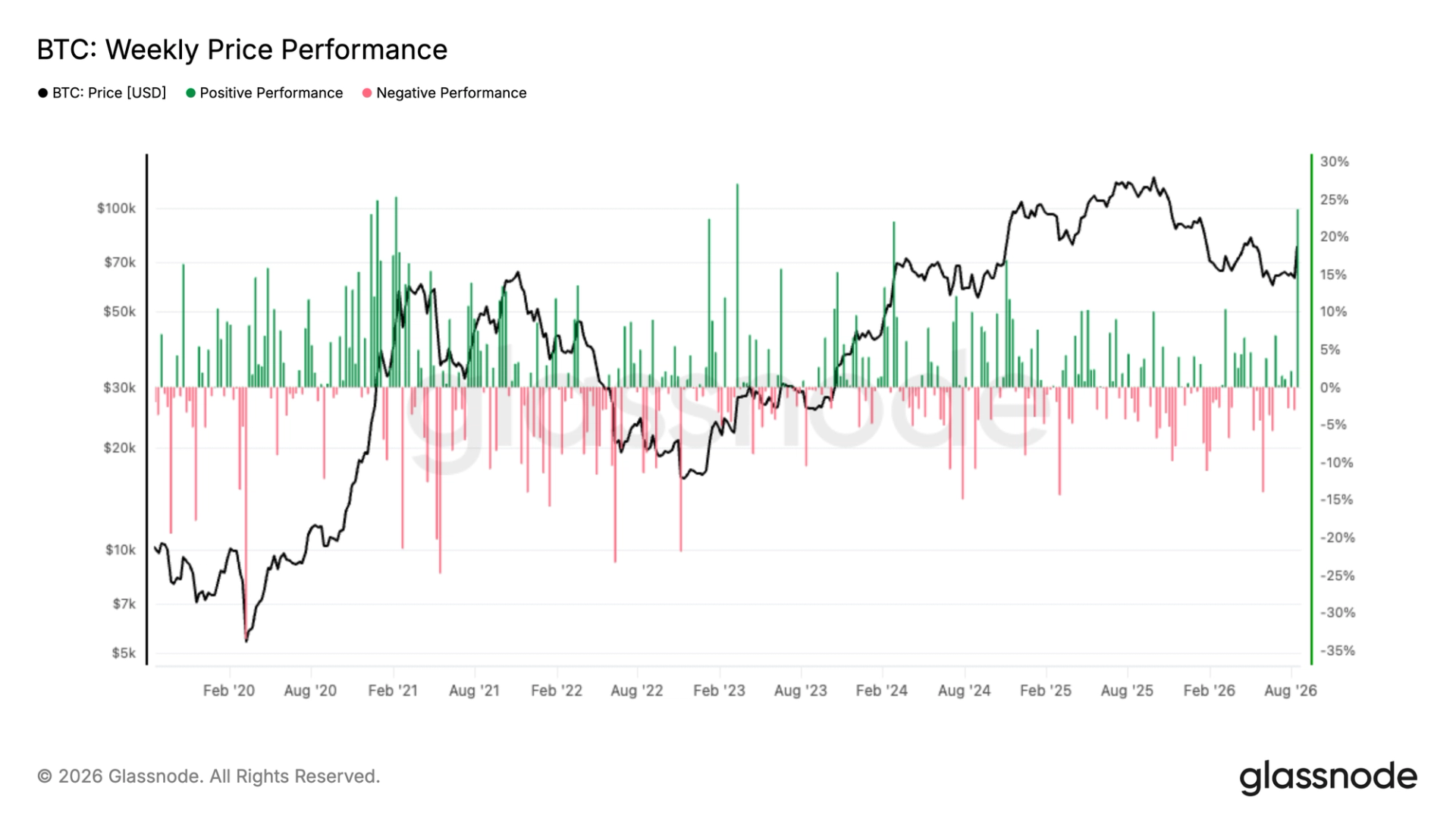
Bitcoin weekly surge 2026 is the strongest performance since February 2021, and it reshapes the operating landscape for crypto platforms, custodians, and product teams. The rally was first reported by CoinDesk in its article “Crypto roars back as bitcoin posts its second‑best week since early 2021” (https://www.coindesk.com/markets/2026/08/24/crypto-roars-back-as-bitcoin-posts-its-second-best-week-since-early-2021). Below, we break down the catalysts, market‑structure shifts, and concrete implications for developers and users.
1. Treasury buybacks reset the risk‑on environment
- Treasury Secretary Scott Bessent announced an expanded $4 bn bond‑buyback program, pushing 10‑year yields down by roughly 12 bps.
- Lower yields weakened the U.S. Dollar Index (DXY) to 98.9, slipping below its 200‑day average of 99.1.
- A weaker dollar traditionally benefits risk assets; crypto’s correlation with equities tightened, providing tailwinds for Bitcoin and Ether.
Takeaway: The macro‑policy move acted as a de‑risking catalyst, allowing crypto products that rely on fiat‑on‑ramp stability (e.g., fiat‑to‑crypto gateways) to see lower conversion friction.
2. Record ETF inflows validate institutional appetite
- Spot Bitcoin ETFs in the U.S. recorded $1.92 bn of net inflows, the largest weekly total since October 2025.
- Ether‑focused ETFs attracted $697 m, their strongest week since early October 2025.
- Inflows coincided with Bitcoin’s price climbing from $62 k to a peak of $79.5 k, then stabilising near $77 k.
Product impact: Custodial providers must scale multi‑asset storage capacity and improve auditability to satisfy ETF‑linked institutional clients. Real‑time settlement APIs are becoming a competitive differentiator.
3. Moving‑average crossovers signal a technical shift
- Both Bitcoin and Ether breached their 200‑day simple moving averages (SMA), a long‑term bullish indicator.
- Short‑term 50‑day SMAs are beginning to converge upward, suggesting a potential “golden cross” if the trend continues.
- Technical analysts view this as a low‑probability, high‑impact signal that can trigger algorithmic trading bots to increase exposure.
Design note: Trading‑platform UI/UX teams should surface SMA cross alerts prominently, allowing users to set automated rebalancing rules without navigating deep menus.
4. The “debasement trade” re‑emerges as a narrative driver
- Gold rose 15 % over the past month, crossing its 200‑day SMA at $4,600, reinforcing the narrative that investors seek scarce assets.
- Bitcoin’s rally mirrors this sentiment, positioning it as a hedge against fiat erosion caused by rising debt and money creation.
- Media coverage of the debasement trade has amplified social‑media sentiment, driving retail inflows into custodial wallets.
Human consequence: New retail users often lack sophisticated risk controls; platforms must enhance KYC/AML workflows and provide clear risk disclosures to mitigate onboarding mishaps.
5. Product teams must adapt to heightened volatility expectations
- The compression of volatility preceding the rally created a “price‑explosion” environment; traders reported a 30 % increase in order‑book depth within 48 hours.
- Crypto lending protocols saw a surge in collateral deposits as users attempted to lock in gains.
- Stablecoin‑backed neobanks, such as Fasset, reported a $1 bn valuation boost, indicating cross‑product synergies between payments and crypto holdings.
Operational focus: Real‑time risk‑engine recalibrations are essential. Developers should implement dynamic collateral‑ratio models that adjust to rapid price swings, reducing liquidation cascades.
6. Infrastructure implications for on‑chain data providers
- Glassnode’s weekly price‑performance metrics highlighted a 23.6 % Bitcoin gain and a 31.3 % Ether gain, underscoring the value of high‑frequency analytics.
- Data‑as‑a‑service platforms are likely to see subscription spikes as institutional traders seek granular on‑chain signals.
- API latency and uptime become critical service‑level agreements (SLAs) for firms building automated trading bots.
Strategic move: Providers should consider tiered pricing that rewards low‑latency access, while offering sandbox environments for developers testing new strategies.
7. Regulatory backdrop remains a wildcard
- The U.S. Securities and Exchange Commission (SEC) has not yet issued new guidance on spot crypto ETFs, but the inflow volumes suggest a tacit acceptance.
- Treasury bond‑buyback announcements are policy‑driven, yet they indirectly affect crypto through macro‑financial channels.
- Ongoing discussions at the Jackson Hole Symposium hint at future monetary‑policy coordination that could further lower yields.
Risk assessment: Product compliance teams must monitor SEC filings and Treasury releases closely; any shift could necessitate rapid product‑feature toggles (e.g., pausing new ETF subscriptions).
8. Market implications for developers
- The sustained price lift expands the addressable market for custodial wallets, prompting providers to add multi‑signature and hardware‑security‑module (HSM) support.
- Developers building DeFi front‑ends should anticipate higher traffic on price‑oracle endpoints and allocate additional caching capacity.
- Marketing teams can leverage the rally narrative to attract institutional partners, but must balance hype with transparent risk metrics.
9. What to watch next – early signals of a sustained rally
- Yield trajectory: Continued decline in Treasury yields would keep the dollar‑weakening effect alive, supporting risk assets.
- ETF flow momentum: A second consecutive week of $1 bn+ inflows would cement institutional confidence.
- Cross‑asset correlation: A sustained gold‑Bitcoin correlation above 0.6 could attract more diversified funds.
- Regulatory clarity: A formal SEC ruling on spot ETFs would remove a major uncertainty, potentially unlocking additional capital.
Actionable tip: Crypto platforms should prepare feature rollouts that capitalize on a bullish environment—tiered staking products, enhanced portfolio analytics, and seamless fiat‑on‑ramp integrations.
Read Next: Treasury buyback Bitcoin surge lifts price 25% to $78K
For a broader view of how product teams are tracking these macro shifts, see the tracked app standings.
Source: CoinDesk, “Crypto roars back as bitcoin posts its second‑best week since early 2021,” 24 Aug 2026.
Related coverage
- Bitcoin macro events July 2026: Rally Faces Crucial Week
- Fed study crypto investors beliefs drive volatility and purchases
- Bitcoin $75,000 rally fuels market shift and product upgrades