Bitcoin $75,000 rally fuels market shift and product upgrades
The Bitcoin $75,000 rally reshapes crypto markets, prompting exchange upgrades, regulatory focus, and AI‑driven product launches.
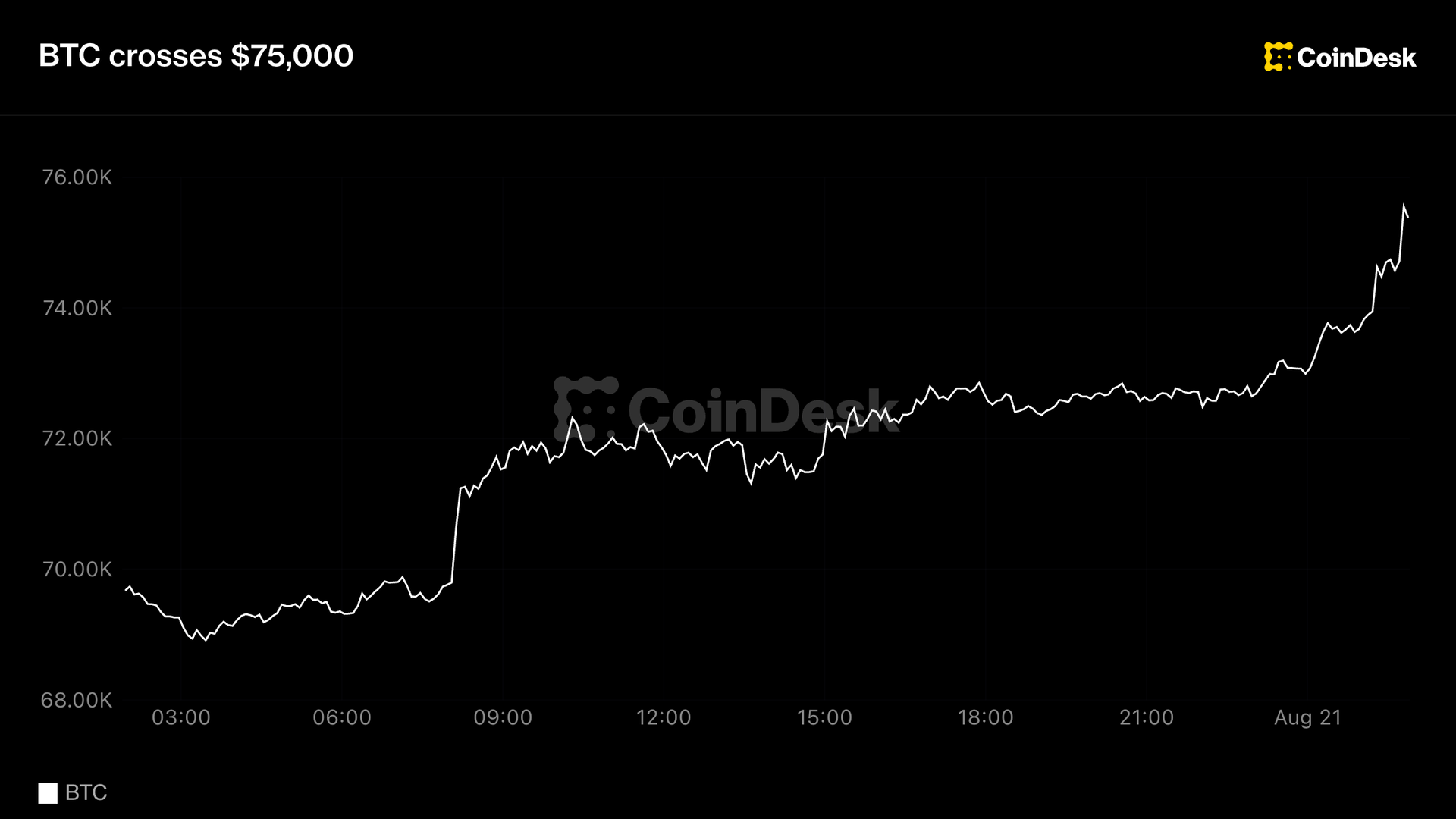
Bitcoin $75,000 rally sets new weekly high
The Bitcoin $75,000 rally surged to $75,400 in late‑U.S. Thursday trading, an 8% rise in the past 24 hours and a 19% gain on the week. The breakout ends a months‑long psychological ceiling and forces market participants to reassess risk, infrastructure, and compliance. Institutional desks, retail traders, and product teams all feel the pressure to adapt quickly.
Immediate product implications for exchanges and wallets
Exchanges must now upgrade latency‑critical components. Order‑book refresh rates that were sufficient at $60,000 become inadequate when price swings exceed 2% within seconds. Major platforms announced sub‑second price feeds, granular stop‑loss controls, and dynamic fee estimators. Wallet providers are tightening transaction‑fee prediction models because higher network activity drives fee volatility and can delay confirmations for fee‑sensitive users.
These technical upgrades translate directly into user experience. Faster price updates reduce the risk of executing trades on stale quotes, while tighter margin alerts help prevent forced liquidations that could erode confidence among newer participants.
Regulatory backdrop and market‑structure concerns
The rally arrives amid heightened scrutiny from the U.S. Commodity Futures Trading Commission (CFTC). Recent statements from the CFTC chief warned that staff would draft tighter crypto regulations if the pending CLARITY Act stalls. A sustained price surge could amplify concerns about market manipulation, especially after a $3 billion short‑squeeze was reported earlier this week.
Regulators are likely to focus on two fronts: transparency of large‑scale trades that can move the market, and the adequacy of risk‑management tools offered to retail investors. Exchanges that cannot demonstrate robust safeguards may face enforcement actions, prompting a wave of compliance‑focused product redesigns. The SEC has also issued guidance on digital‑asset custody, reinforcing the need for clear audit trails and capital‑adequacy buffers (see the latest SEC guidance).
Institutional reaction and treasury strategies
Institutional investors view the Bitcoin $75,000 rally through the lens of treasury‑buyback dynamics. A recent strategist note suggested that continued U.S. Treasury repurchases could provide a tailwind for Bitcoin, potentially nudging the asset toward $180,000 over a multi‑year horizon. While speculative, the current price action has already prompted several asset‑management firms to rebalance crypto allocations, increasing exposure to Bitcoin and Ethereum.
For firms that manage on‑chain collateral, the surge raises questions about liquidity buffers. The rise in Ether (up 25% weekly) and XRP (up 28%) indicates broader market enthusiasm, yet the concentration of capital in Bitcoin means that any sharp correction could reverberate across the entire digital‑asset ecosystem.
Design choices driven by AI and user control
Product teams are leveraging AI to mitigate operational risks introduced by rapid price movements. AI product launches showcases how AI‑driven order routing can adapt to volatile conditions while giving users granular control over risk parameters. Similar approaches are emerging across custodial platforms, where machine‑learning models flag anomalous trade patterns in real time.
The integration of AI dovetails with broader industry trends toward modular product architectures. By decoupling price‑feed ingestion from trade‑execution engines, developers can push updates without downtime, a crucial advantage when markets move at breakneck speed.
Retail impact and on‑chain activity
Retail participants stand to gain from tighter UI updates, but they also face heightened exposure to market swings. The rally has attracted a wave of new entrants, many of whom lack sophisticated risk‑management knowledge. Educational initiatives from exchanges are therefore critical; clear guidance on stop‑loss placement and position sizing can reduce the likelihood of sudden losses.
On‑chain activity mirrors this influx. Transaction volumes on the Bitcoin network have risen, pushing median confirmation times higher and increasing fee pressure. Users who rely on low‑fee strategies may find their transactions delayed, prompting a shift toward fee‑prediction tools that incorporate real‑time mempool data.
What to watch next
- Margin‑call thresholds: Exchanges will publish updated liquidation levels; monitoring these thresholds can signal when retail traders are most vulnerable.
- Regulatory filings: Any movement on the CLARITY Act or new CFTC guidance will likely trigger product‑level compliance updates.
- AI‑driven risk dashboards: Early adopters of AI monitoring may set new industry standards for real‑time risk visibility.
- Treasury‑buyback signals: Continued U.S. Treasury repurchases could sustain upward pressure on Bitcoin, but a reversal would test the resilience of newly‑implemented product safeguards.
- Network fee dynamics: Watch mempool congestion and fee‑prediction model adoption as transaction demand spikes.
External context
For a broader view of how corporate finance trends intersect with crypto price dynamics, see the recent analysis in Wired Business.
Source
Original reporting can be found at coindesk.com
Related coverage
- Bitcoin Price Surge: How AI Credit Crisis Could Fuel Rally to $1 Million
- Binance AI trading agents open crypto markets with user‑set controls
- BitGo Q2 Loss: Navigating Revenue Surges and Digital Asset Volatility